In this guide
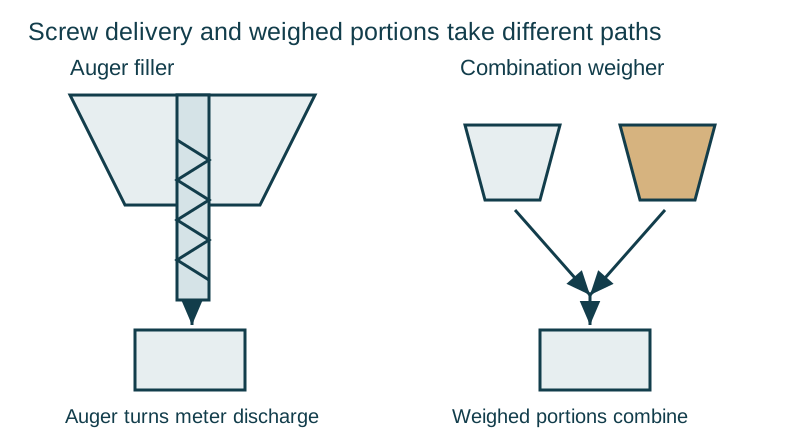
Trace a multihead-weigher fault through three questions: did product reach the hopper consistently, was the weight stable when selected, and did the complete portion reach the package? This sequence separates feeding and measurement faults from downstream transfer problems before settings are changed.
Capture the fault before intervention
Record the recipe, target mass, line speed, product batch, moisture or temperature condition, alarms and affected head numbers. Save the original settings and observe whether the fault affects one head, a group or the whole machine. Compare the indicated combination total with a suitable reference measurement of the finished portion.
Use safe observation positions. Isolate electrical, pneumatic and stored mechanical energy according to the machine procedure before clearing a jam, removing a hopper or reaching into a guarded zone. A stopped display is not evidence that the mechanism is isolated.
Diagnose the supply path
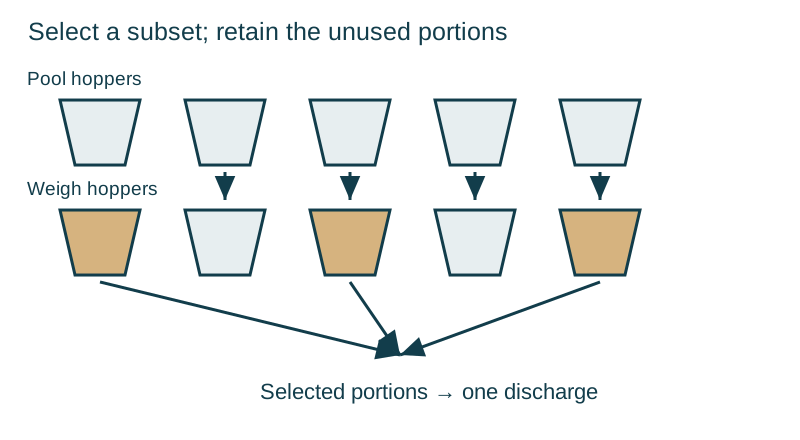
A starved head may be waiting for material rather than struggling to measure it. Inspect upstream supply, dispersion and the relevant feeder before increasing amplitude. Check whether material bridges at an inlet, accumulates on one side, sticks to a contact surface or arrives in large surges.
Kenwei’s pickle-weigher troubleshooting material identifies supply inconsistency, sticky residues, moisture and individual hopper mechanisms as investigation areas for its application. Use those observations to frame inspection of the actual machine. Select cleaning methods, replacement parts and permitted adjustments from its own instructions.
| Symptom | Evidence to collect | First distinction |
|---|---|---|
| Repeatedly starved heads | Occupancy and feeder activity by head | Upstream supply versus local feeder |
| One unstable head | Empty zero, reference response and mounting condition | Local mechanical or sensor issue |
| All heads slow to stabilize | Vibration, external contact and synchronized machine events | Shared disturbance versus product motion |
| Correct total but light package | Residual product and discharge sequence | Weighing decision versus transfer loss |
| Intermittent product in seals | Release time, product tail and jaw timing | Delivery spread versus acceptance window |
Separate drift from disturbance
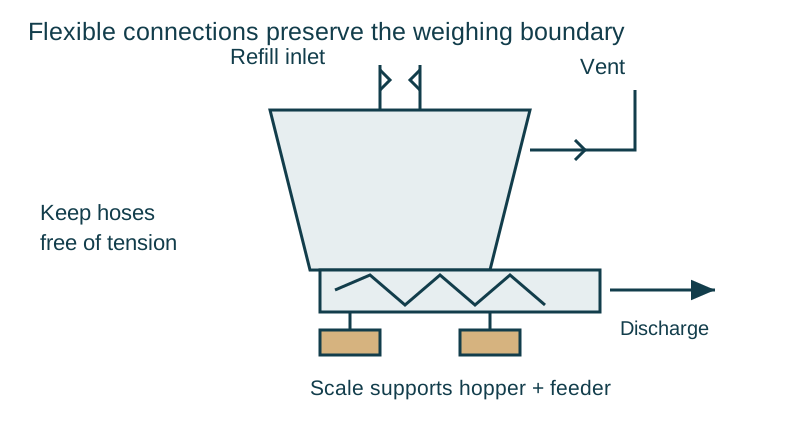
For an empty hopper, observe whether zero is stable and repeatable after normal movement. Residue, a binding part, cable force or a damaged mount can change the apparent load. Compare individual heads using the manufacturer-approved check procedure.
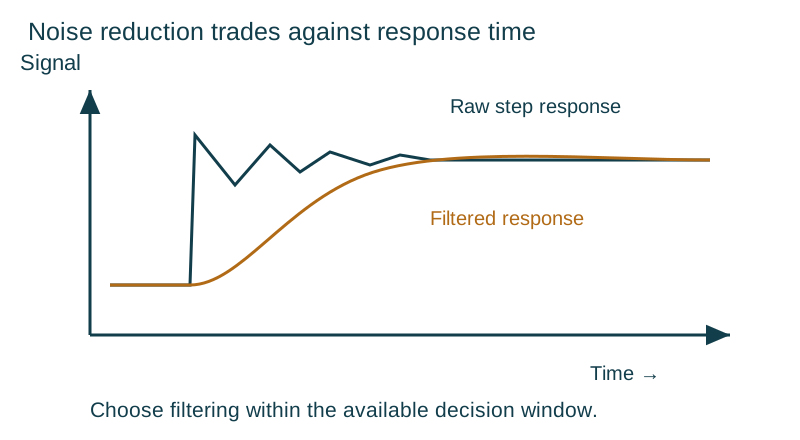
If several heads become unstable at the same moment, inspect shared vibration sources and structural contact. More filtering can reduce visible noise while delaying readiness. A stable-looking screen does not prove that the signal settles within the production cycle.
Change one authorized variable at a time and keep before-and-after evidence. Restoring a known configuration is more reliable when original values and software versions are recorded. Avoid bypassing a troublesome head as a permanent response before its fault has been understood and production consequences assessed.
Inspect the discharge as a separate event
Confirm that gates open and close completely, product releases cleanly and the chute remains clear. Look for delayed particles, adhesion and carryover into the next package. Check the request and completion signals between weigher and bagger, including the response to stops and missing requests.
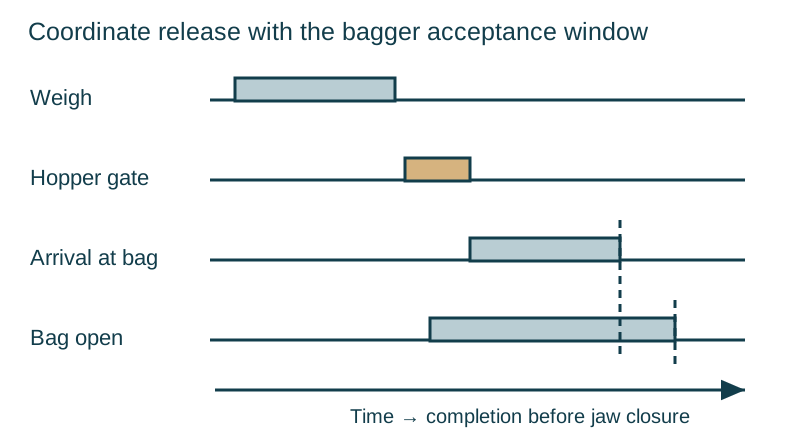
The selected weight exists in the hoppers; the saleable portion exists in the package. Differences between them can arise from retention, spillage, split discharges or product intercepted by closing jaws. Increasing the target weight can mask those faults and raise giveaway without repairing the transfer.
Verify the repair and prevent recurrence
Repeat the relevant reference checks after cleaning, mechanical work or sensor replacement. Run representative product at the authorized rate and compare head availability, finished-package variation and reject behaviour with the earlier fault record. Include the condition that triggered the fault, such as a refill or restart.
Escalate persistent zero shift, damaged wiring, repeated overload or unexplained control errors to qualified service personnel. Keep the symptom, evidence and completed checks together so the service investigation starts with the failing condition rather than a list of undocumented parameter changes.
Continue with the packaging weighing systems collection.