
Specify the complete decision
A dynamic checkweigher measures a moving package, classifies the result and coordinates its destination. Select the conveyor, sensor, signal processing and reject mechanism as one application.
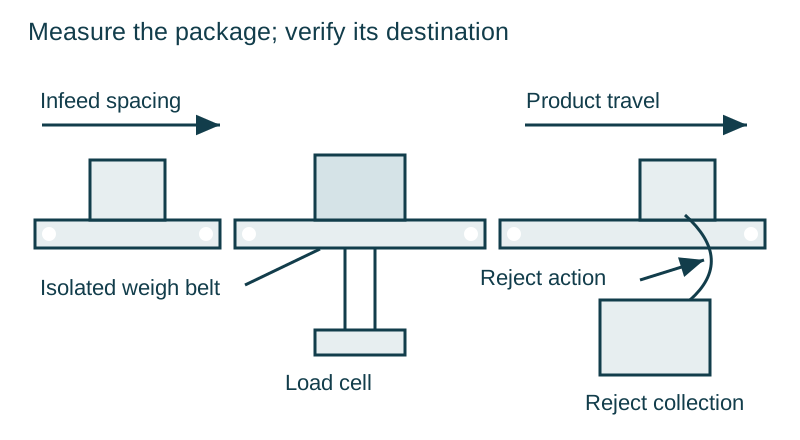
Control the measuring environment
Stable transfers, clearance from guides and isolation from vibration help preserve the intended load. Air currents can disturb light packages; a suitable enclosure may be part of the installation. Verify guards and wind shielding without introducing contact with the weighing assembly.
Choose and prove the reject
Air jets, pushers, diverters and drop-through arrangements serve different packages. Test the required movement at actual spacing and speed, including neighbouring acceptable packages. Confirm arrival in the reject collection area and the response to installed bin-full or actuator fault conditions.
| Verification layer | What it establishes |
|---|---|
| Reference-load calibration | Relationship between reference mass and indication |
| Repeated dynamic passes | Bias and repeatability under production conditions |
| Reject challenges | Correct physical destination and installed fail-safe response |
| Net-content programme | Applicable tare, sampling, records and product disposition requirements |
Keep the regulatory scope explicit
OIML R 51 addresses automatic catchweighing instruments. Local instrument and packaged-goods rules determine the requirements for a particular market. Agree the applicable limits and verification plan with responsible quality and metrology personnel.
Begin with checkweigher selection, prepare calibration and verification records, or calculate the dynamic weighing and reject windows.