In this guide
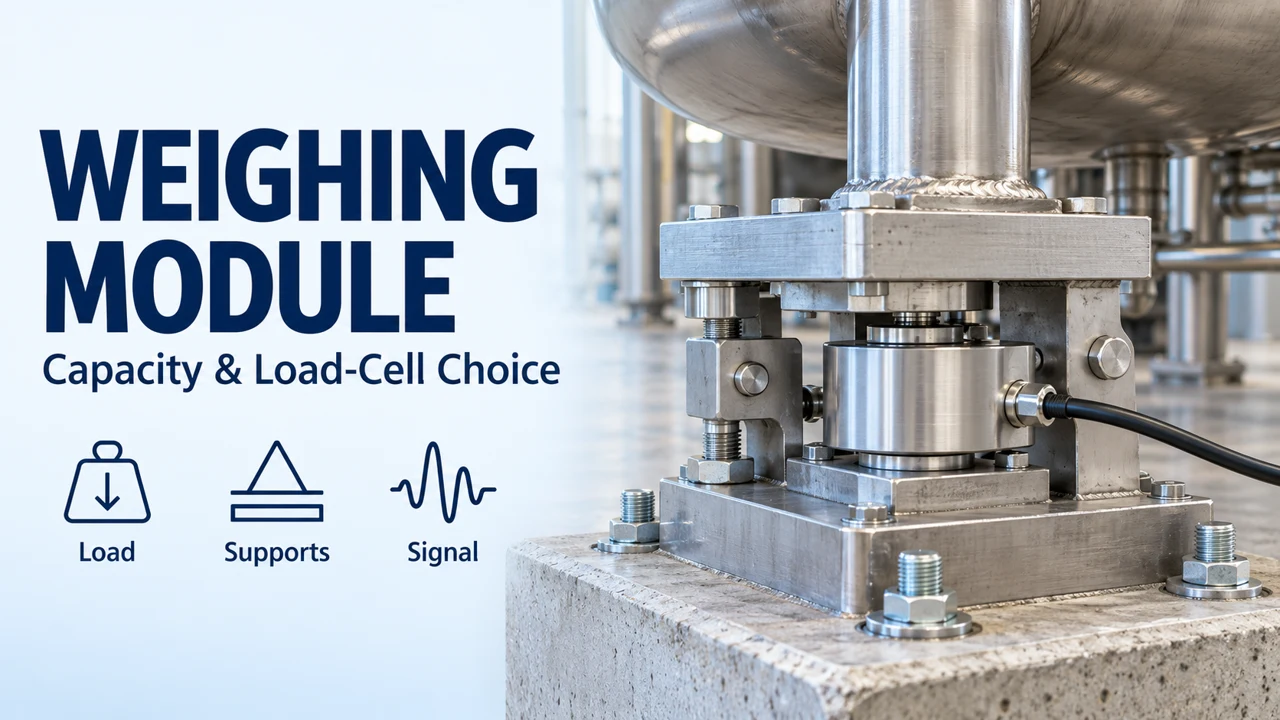
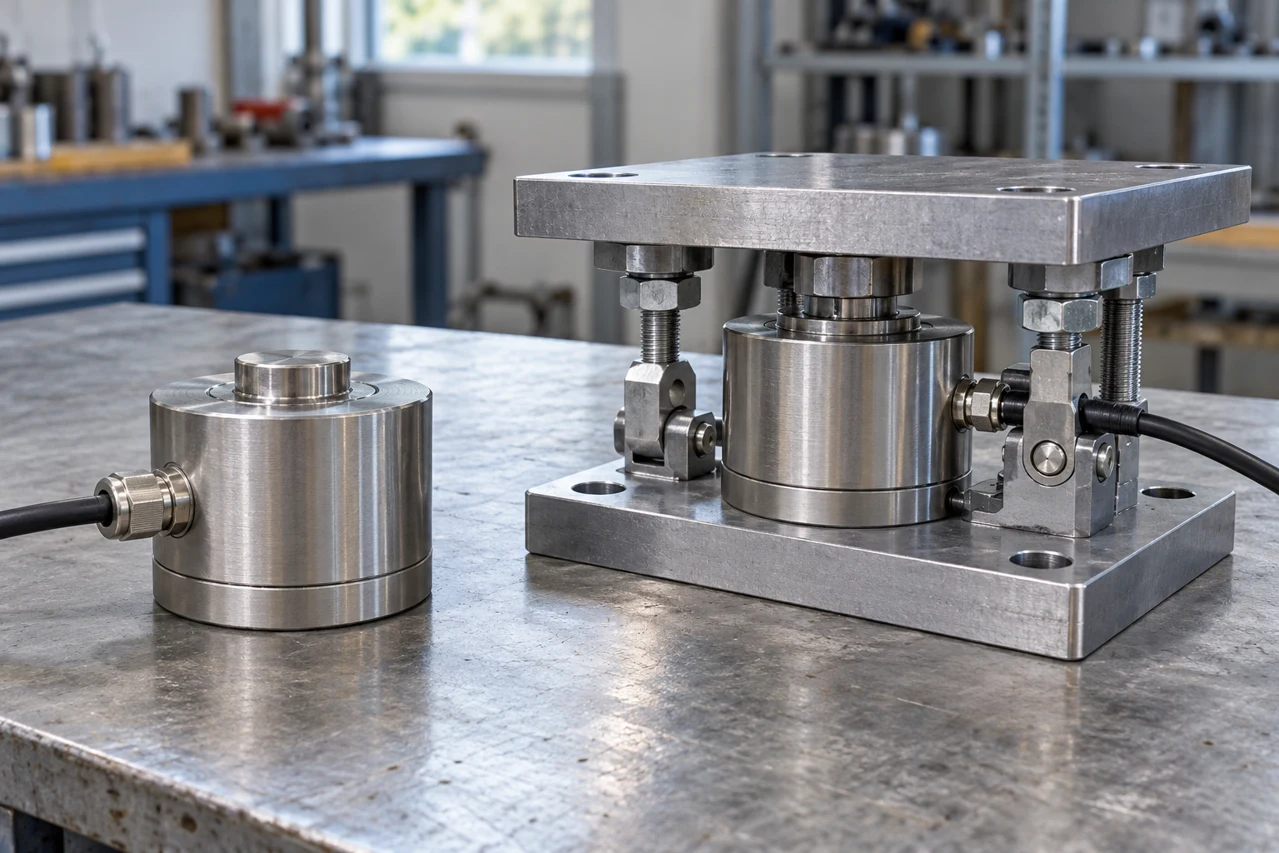
Weigh modules combine load cells with engineered hardware designed to optimize load introduction.
For a weighing module vs load cell decision, start with the mounting arrangement, then work through load cell capacity and the controller check. Use the selection questions below alongside our load cells and controls guide.
Weighing module or bare load cell: what are you selecting?
Weigh modules act as mechanical suspension systems that direct tank weight onto the load cell.
Use these questions to define the purchase:
- For a bare load cell: which mounting arrangement will you pair with it?
- For a weighing module: which load-transfer hardware and restraints are included?
- For either choice: what load reaches each support, and what signal does the controller require?
Hopper scale load cell sizing: build the load inventory
Dead load includes the structure and its pipes, pumps, motors, agitators, insulators, heating fluids and accessories.
The maximum product weight or scale range must be known.
Gross Weight is Dead Load plus Product Weight.

Calculate the per-support load
Utilcell’s selection guide is only suitable for systems totally supported on load cells with evenly distributed loads and without great asymmetries.
Theoretical load per support is Gross Weight divided by the Number of Supports.
Cell Nominal Capacity = k x Gross Weight / N
Use the support count for N and the application-dependent safety coefficient for k.
Select the application case explicitly:
| Utilcell application | Capacity selection guidance |
|---|---|
| Interior tank | For an interior tank with 3 supports, k = 1,3. |
| Interior tank | For an interior tank with 4 supports, k = 1,5. |
| Agitated tank | For a tank with moderate agitation, k = 1,7. |
| High dead-load share | When Dead Load is over 50% of Gross Weight, the recommended safety margin is k=2. |
Estimate real load on each supporting point under all operating circumstances, including extreme situations.
After installation, check load distribution at each bearing point.
Check agitation, impact and lateral loading
Under normal static loading, little or no horizontal shear force is transmitted to the load cells.
Dynamic loading transmits horizontal shear forces through product placement or processing.
Agitation, impact and possible product overfill are checks in capacity selection.
Verify whether additional safety elements are needed against earthquakes or strong winds.
Before final selection, record the loading method, agitation and possible overfill in the equipment brief.
Compare the mechanical features by module
Ask for the proposed assembly drawing and list the required features against it. The following manufacturer examples give concrete items to check.
HBK tank modules
HBK supplies C16M weighing modules for max. capacities 20 t up to 200 t.
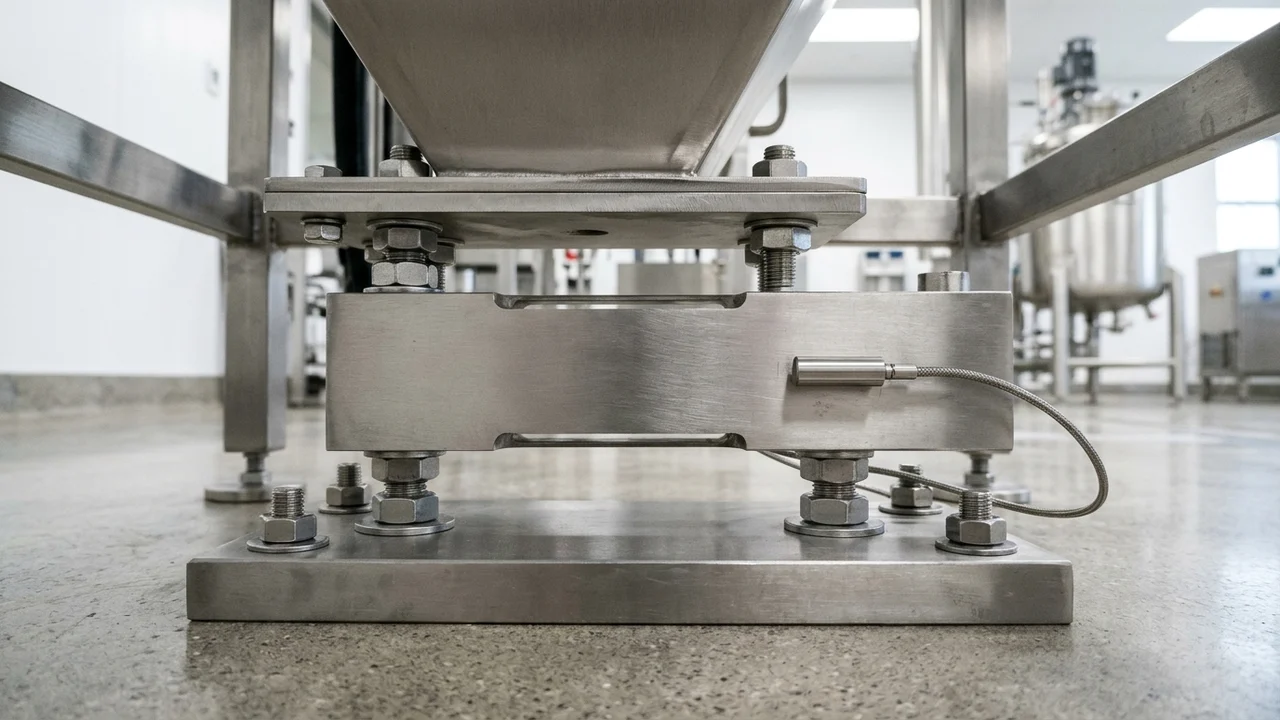
The module consists of a lower foundation plate, load cell with load-transfer elements and upper tank plate.
A simple anti-liftoff device may optionally be installed by the user.
Dynamic-loading modules
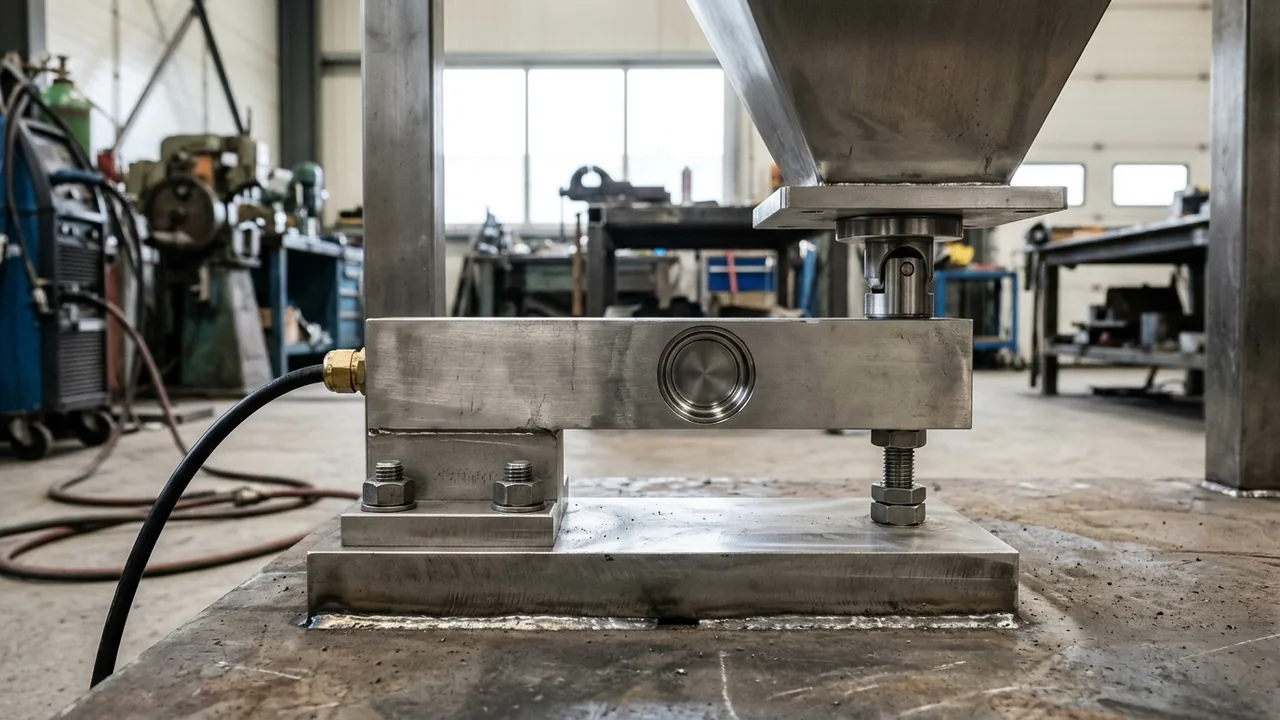
METTLER TOLEDO SWC415 PinMount weigh modules are designed for dynamic-loading applications such as conveyors, mixers and blenders.
An optional stabilizer can stabilize a scale subject to heavy vibration or high torque.
Thermal expansion remains possible with the stabilizer installed.
FLEXMOUNT top plates and servicing
FLEXMOUNT floating, semi-floating and fixed top plates provide system checking while allowing expansion and contraction.
The anti-lift/jacking bolt restrains tipping and allows an empty vessel to be lifted for servicing.
For installation follow-through, see load-cell mounting, overload stops and side-load restraints.
Check the signal before closing the capacity choice
Dead load uses a portion of the load-cell output.
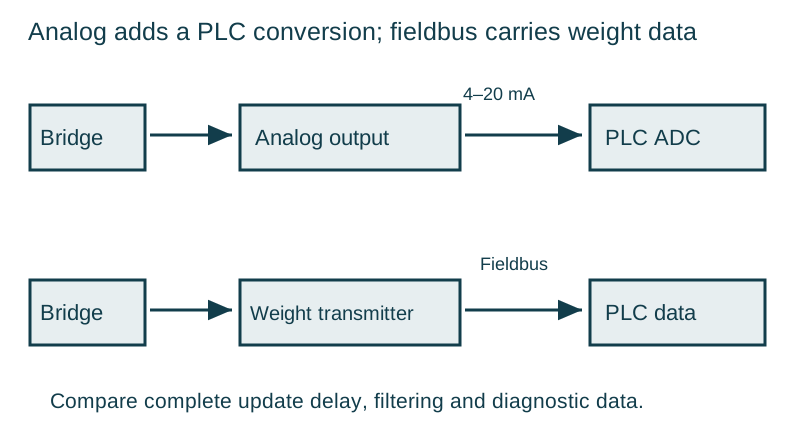
For a proposed Hardy weighing system, compare electrical output per division with the controller specification.
Insufficient signal may require redesign of live load, dead load or load-cell capacity.
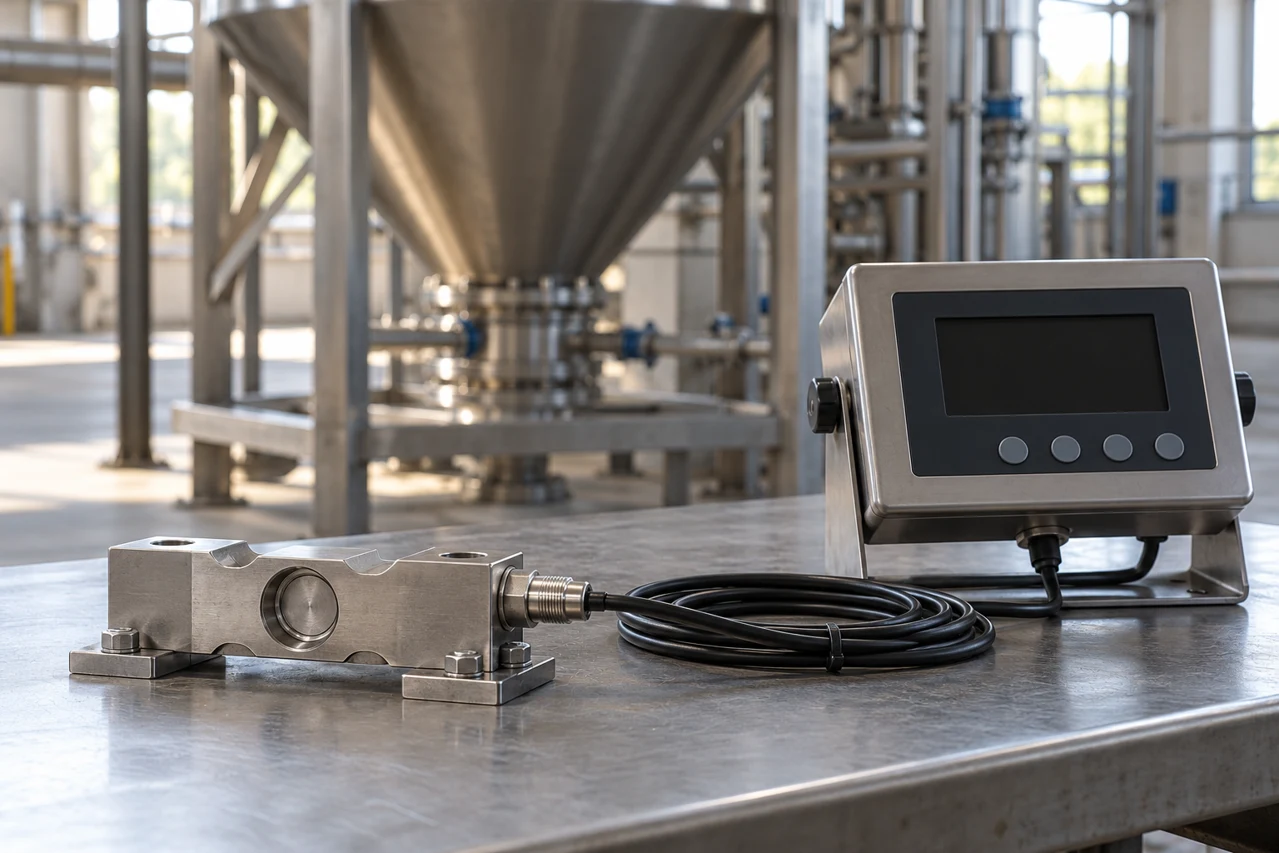
Prepare the vessel and accessory weight, maximum product weight, support layout, operating conditions and required weighing increment for the selection review. Return to load cells and controls to continue planning the system.
Questions before ordering
Is breaking load the operating capacity?
LAUMAS defines breaking load as the maximum load a cell can withstand without breaking, expressed as a percentage of full scale.
Use the nominal-capacity selection above for the weighing requirement.
What should be checked after installation?
After installation, check load distribution at each bearing point.
What about a suspended vessel?
For METTLER TOLEDO tension weigh modules, clevis and rod assemblies measure only vertical loads and restrain vessel movement.
Sources
- METTLER TOLEDO — Weigh Module Engineering Handbook and engineering FAQ
- METTLER TOLEDO — FLEXMOUNT brochure
- Utilcell — How to choose a Load Cell?
- HBK — Tank Weighing Module Mounting Instructions
- METTLER TOLEDO — PinMount weigh module data sheet
- Hardy — How do I select the right capacity load cell?
- LAUMAS — Load Cell Technical Features
- METTLER TOLEDO — Tension Weigh Modules