In this guide
A multihead weigher prepares several small portions, weighs them separately and selects a combination close to the target package mass. It gains flexibility from having multiple candidate portions ready at the same time. The packaging machine receives a coordinated discharge rather than weighing the whole pack as it fills.
Follow the product path
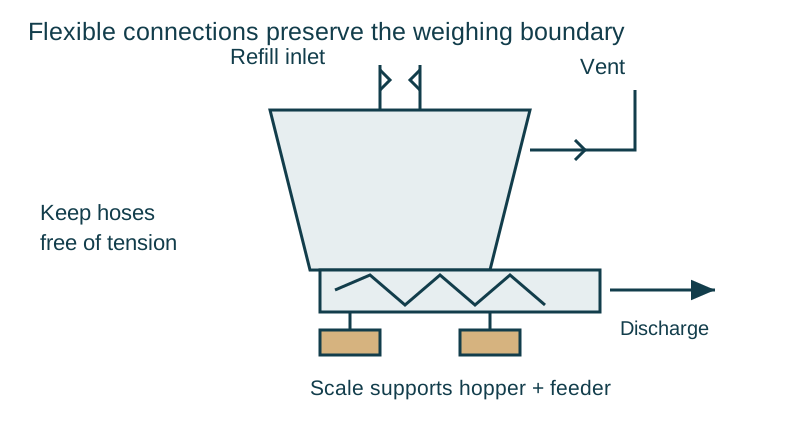
Ishida’s multihead-weigher brochure describes the sequence from inlet chute to dispersion table, radial troughs, pool hoppers and weigh hoppers. Individually controlled feeders distribute material. A pool hopper buffers product above the weighing hopper so replenishment and measurement can be coordinated.
Once a weigh hopper has a sufficiently stable value, the controller can include it in a combination. Optional booster hoppers provide another storage stage in configurations that require it. The brochure shows several hopper arrangements, so trace the physical configuration on the actual machine before interpreting its status screen.
Understand what combination selection changes
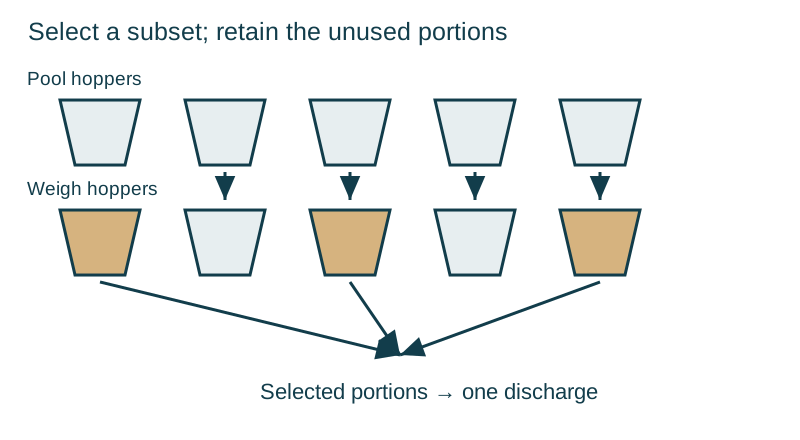
Let each available hopper contain mass wᵢ and let S be a selected subset. Its total is Σwᵢ for i in S. The controller evaluates eligible totals against the target and the permitted acceptance rules. Eligibility also depends on whether a hopper is ready, stable and permitted to discharge.
For a fixed choice of k hoppers from n, the number of subsets is C(n,k) = n! / [k!(n−k)!]. This describes the size of a mathematical choice set. Actual controllers constrain which subsets they evaluate, how they handle product mixtures and how they trade target closeness against cycle availability.
Unused portions remain available for later combinations. The discharged hoppers refill and return to the pool of eligible measurements. A head count therefore describes hardware capacity; it does not by itself specify production throughput or achievable package variation.
Keep the handoff explicit
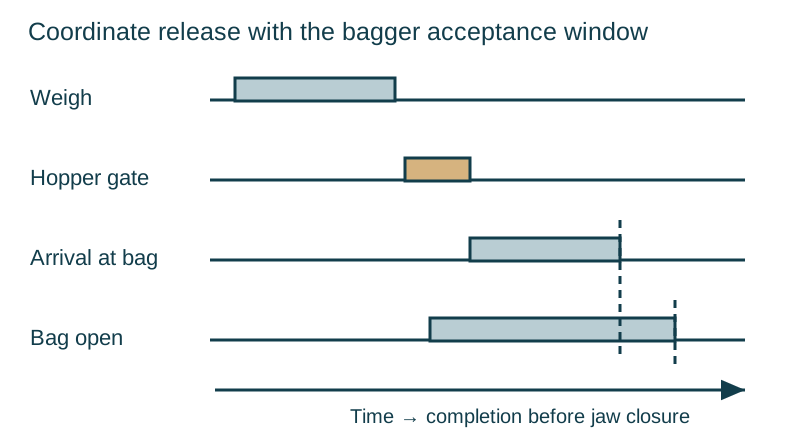
The weigher and bagger need an agreed sequence for ready, request, discharge and completion signals. The permitted sequence depends on the controls architecture. At commissioning, trace each signal to its physical consequence and define what happens on a timeout, inhibited discharge or downstream stop.
Product has a travel time between hopper gates and the forming tube. Gate opening, product release, chute transit and jaw closure must leave enough room for the complete portion. A correct hopper total can still produce a bad package if part of the portion arrives late or contaminates the seal area.
| Stage | Useful observation | Failure pattern |
|---|---|---|
| Dispersion and feeders | Even distribution and replenishment | Starved heads or repeated overfilling |
| Pool hopper | Complete transfer and gate movement | Residual product or delayed refill |
| Weigh hopper | Stable reading before selection | Excess settling or drifting zero |
| Discharge path | Complete release and transit | Product retained in a chute |
| Bagger interface | Request, release and jaw timing | Split portions or product in seals |
Match feeding to the material
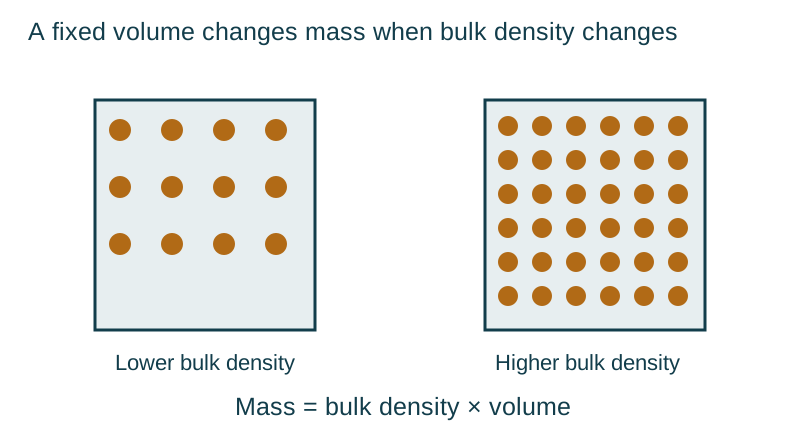
Particle size, cohesion, surface moisture and fragility affect how consistently a feeder supplies the hoppers. Bulk-density changes can alter the mass delivered by the same feeder movement. A recipe should therefore describe the product condition as well as electrical settings.
Reduce large variations in the incoming supply before compensating with more aggressive vibration. For fragile products, assess breakage through the complete fall path. For sticky products, inspect release from contact surfaces and gates. Surface texture, gate design and feeder type are application choices requiring representative product trials.
Verify the system at operating conditions
Record target mass, head availability, combination frequency, hopper residuals, line speed and the final package weights. Compare the weigher’s selected total with an independent check of the finished portion to identify transfer losses or carryover. Include starts, stops and changeovers, not only a steady run.
Use the hopper timing and accuracy guide for configuration decisions and the troubleshooting guide when supply, vibration or discharge becomes inconsistent.
Continue with the packaging weighing systems collection.